<!———
Work info
———>
Timeline:
Jan 2026 - Apr 2026
Tools:
Figma, Claude, CodeX, Granola
My Roles:
Design Engineer: Led the build of the platform's coded prototype using Claude Code.
UX Researcher: Ran the user interviews, artifact study, and usability tests.
<!———
Context
———>
A famous murder trial collapsed on evidence handling
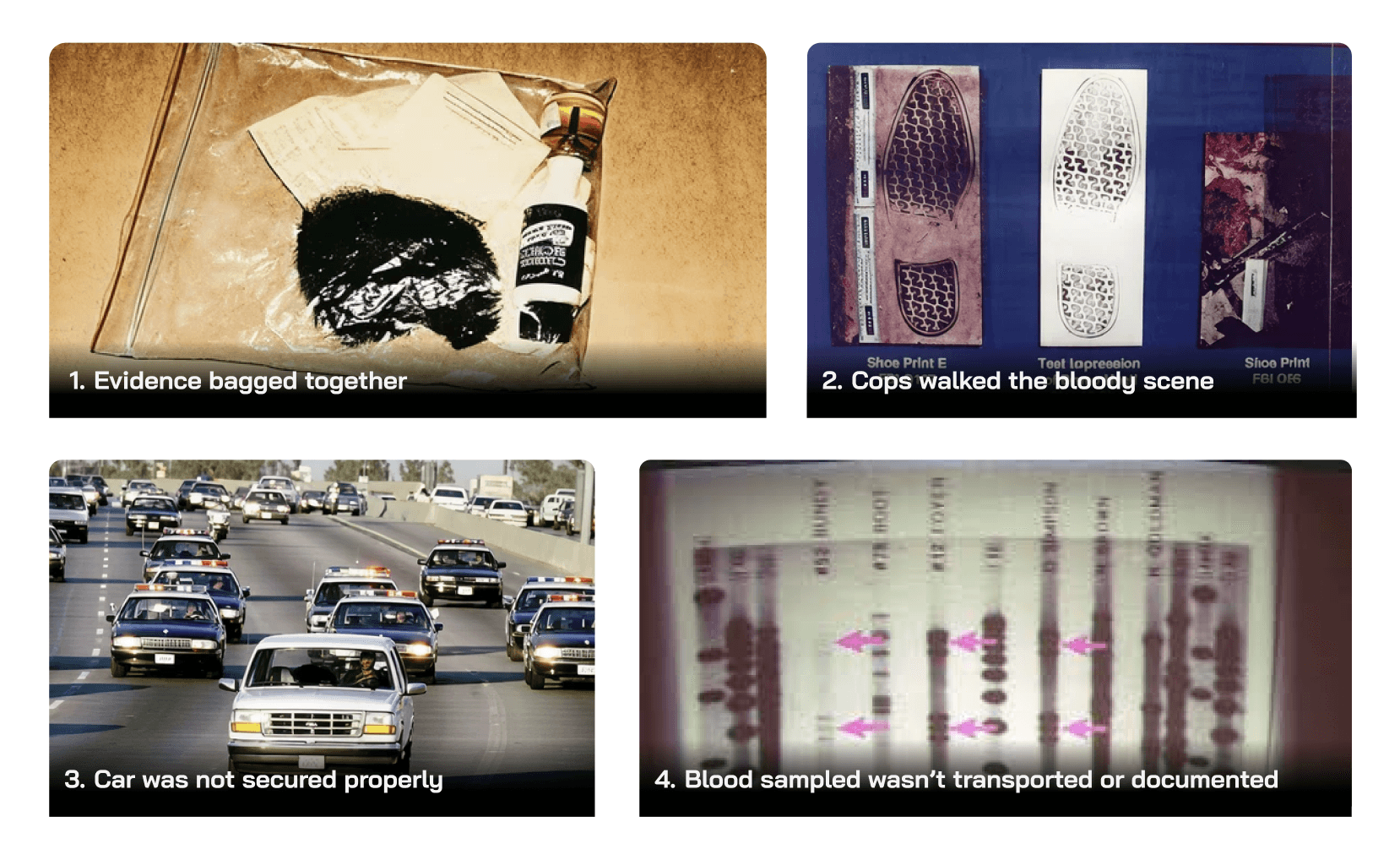
In 1994 the case against O.J. Simpson had strong physical evidence behind it, and it fell apart anyway. Investigators bagged separate items together, walked the scene before it was secured, and left blood samples undocumented. At trial, the defense barely touched the evidence. It went after the handling, and that was enough.
The same mistakes still happen. Officers record the most legally sensitive document in a case by hand, on paper, at the scene.
Documentation errors have contributed to roughly 24% of US DNA exonerations.
Officers trust paper because it holds up in court
Officers weren't loyal to paper out of habit. Several said a digital record would be more reliable than the notes they take now. The hesitation was court: paper has held up under cross-examination for decades, and a new app hasn't.
So the bar was high. Officers would only switch if the digital record was as defensible as paper. We built SampleCSI with SampleServe to clear it, starting at the scene, where the record begins.
Outcomes
100%
of officers said they'd use it over paper
Shipped
a working prototype to the client - Sample Serve

<!———
Research
———>
What we found: paperwork, broken handoffs, overload
We used a mix of methods to understand how evidence actually moves:
Secondary research on chain-of-custody law and current procedures
Interviews with officers across patrol, investigations, and evidence units
An artifact study of the paper forms departments use today
A competitive teardown of three platforms: Axon, Omnigo, and NICE
We clustered it all through affinity mapping in FigJam, and three patterns kept surfacing.
Piles of paperwork
Officers enter the same details over and over, from scene to notebook to station to management system. "Your notes are only as good as the person writing them," one told us. Miss a step, and the chain of custody gets "a little bit muddled."


Teams collaborate, but systems don't
A scene has several people on it and no shared record. "I go in and retype almost everything," one said. The quieter failure is a sheet of paper that "sits somewhere on a desk or in a folder" because someone forgot to hand it off.
Too much to think through, all at once
A live scene is full of competing demands. "The bigger the case, the more room for error." And the smallest slips are common: "It's surprising how often people forget to put the date on that label."

No two agencies collect evidence the same way
The artifact study made this clear early. There's no single way agencies document evidence: they use different forms, different terms, and weigh different details. Our first instinct was to standardize all of it into one clean flow. The more forms we read, the worse that felt. A standard flow would have been tidier for us, but it would have forced officers to abandon the way they already work.
So we made a tradeoff. The record had to stay court-ready, but the tool had to bend to how each agency already works, not force officers to change. That decision shaped everything we designed next.
<!———
Design
———>
Creating SampleCSI
Sketches
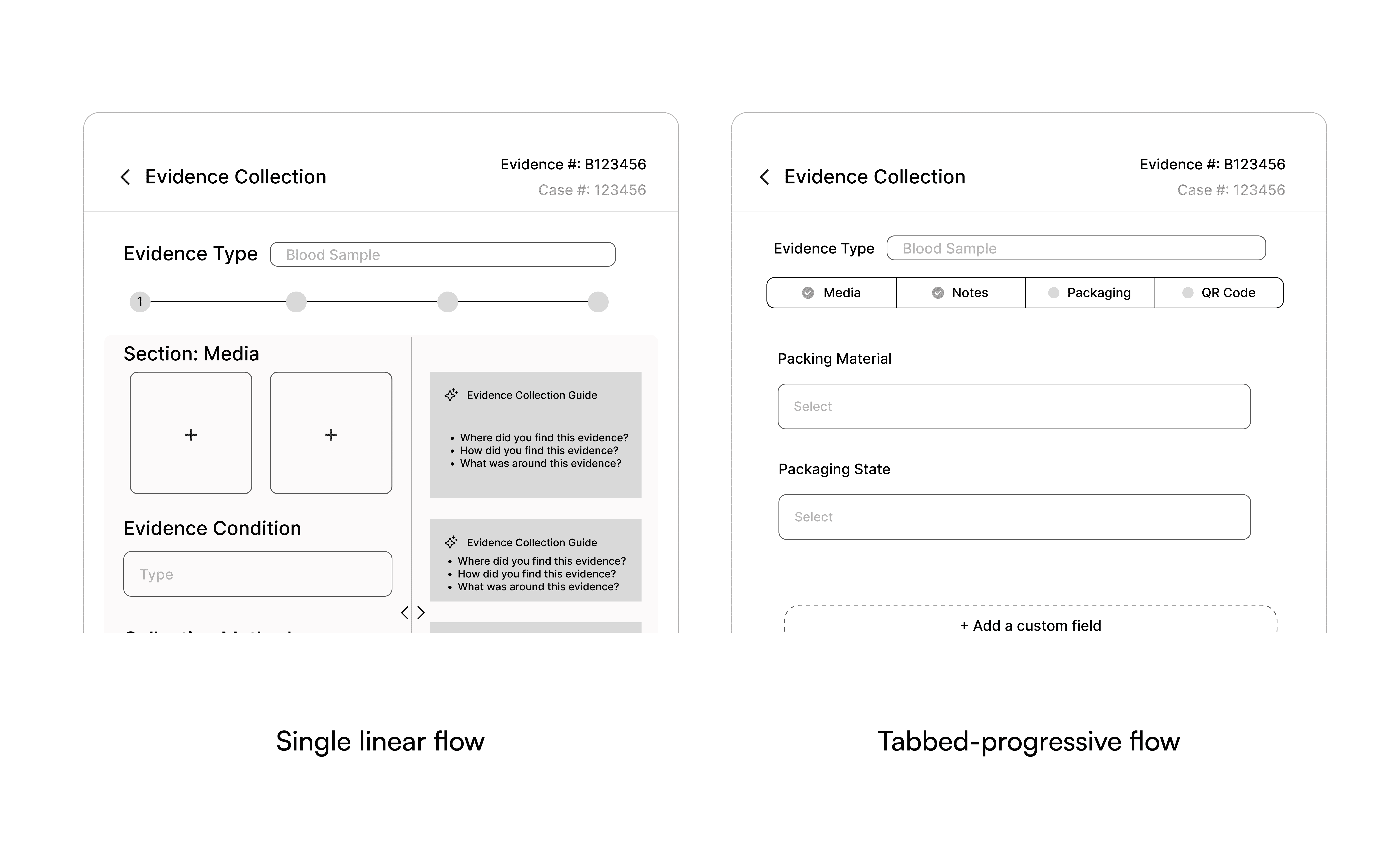
The whole team ran a round of rapid ideation, sketching as many screen concepts as we could against a tight clock, then regrouped to keep what was worth building on.
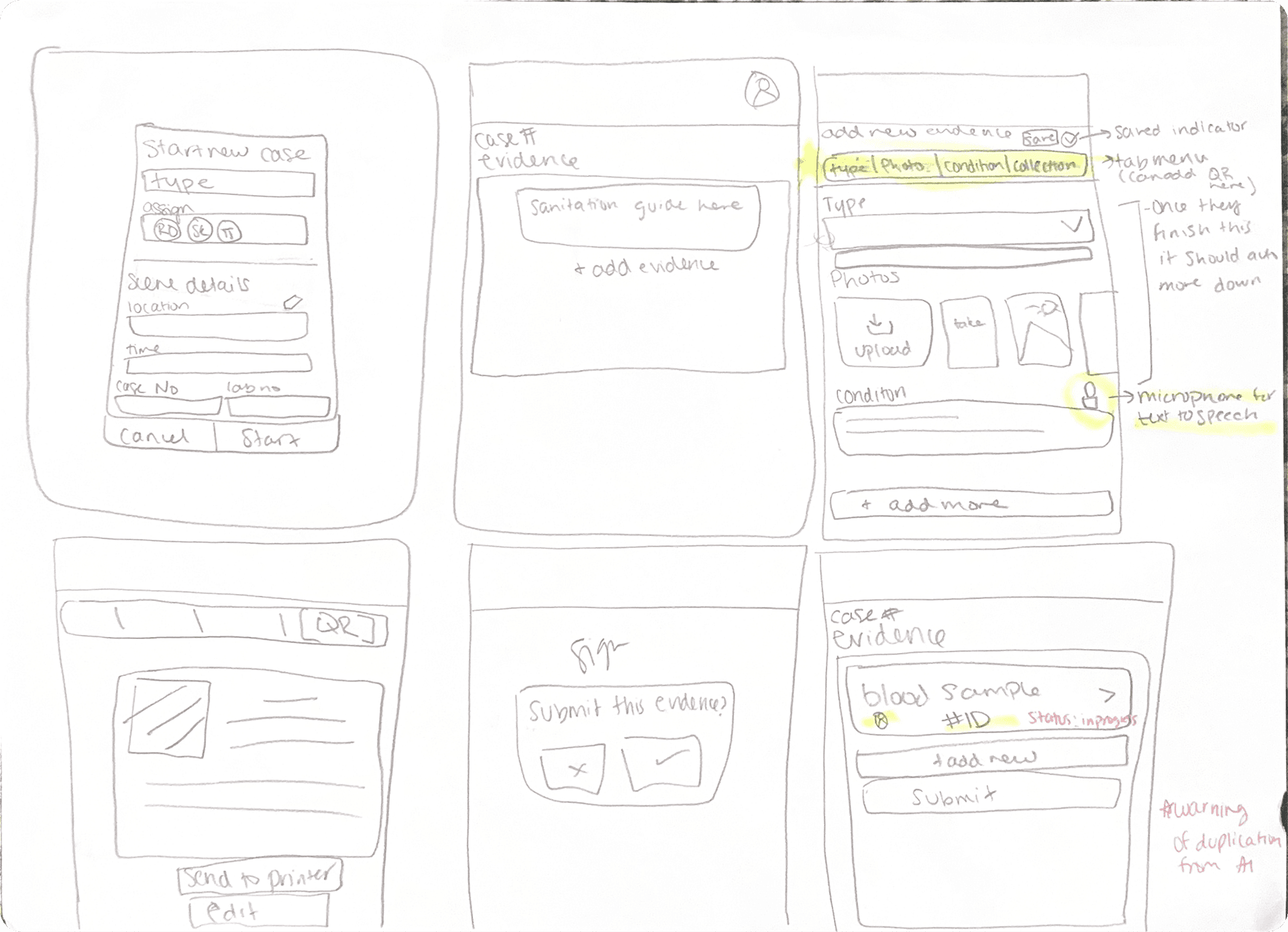


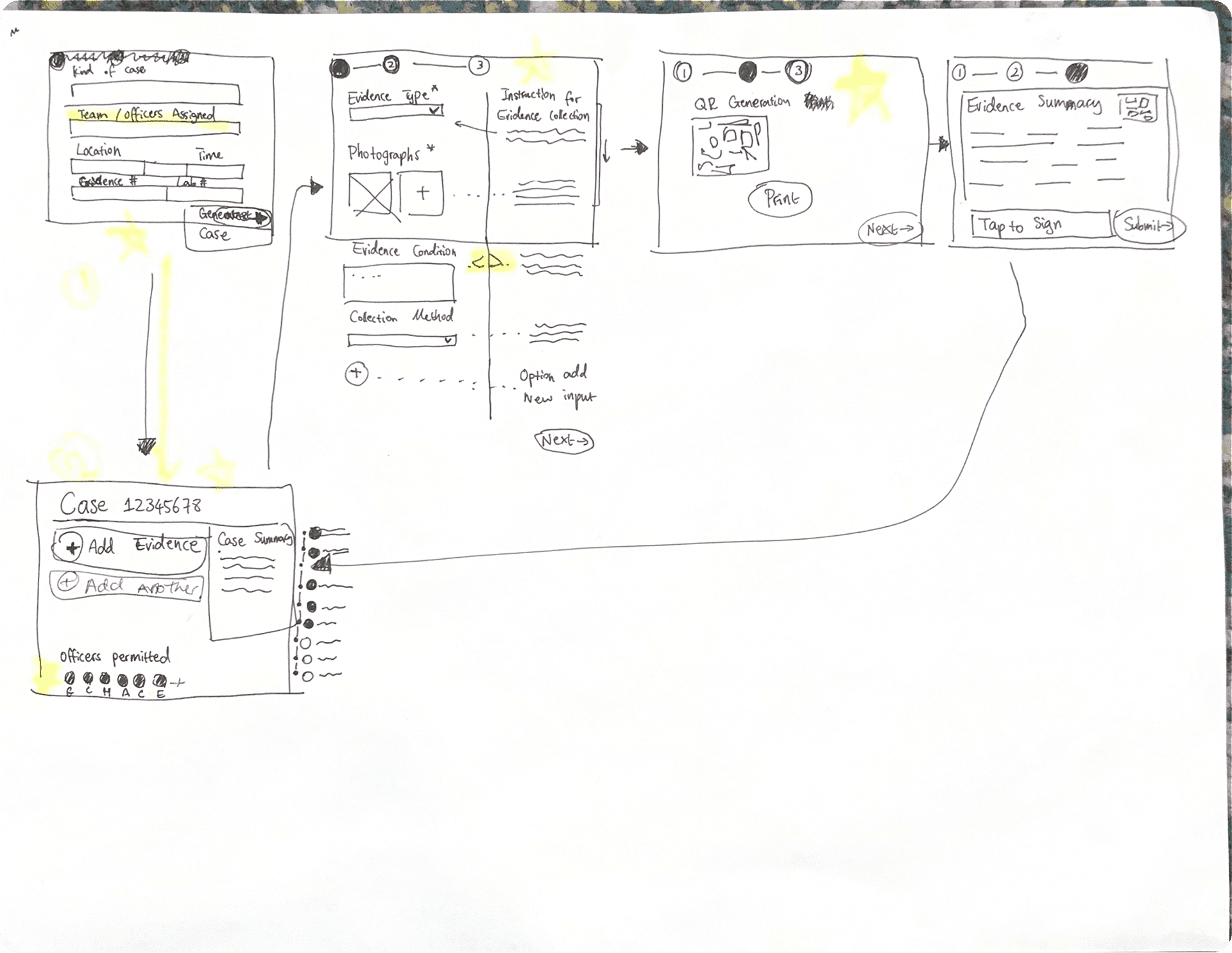
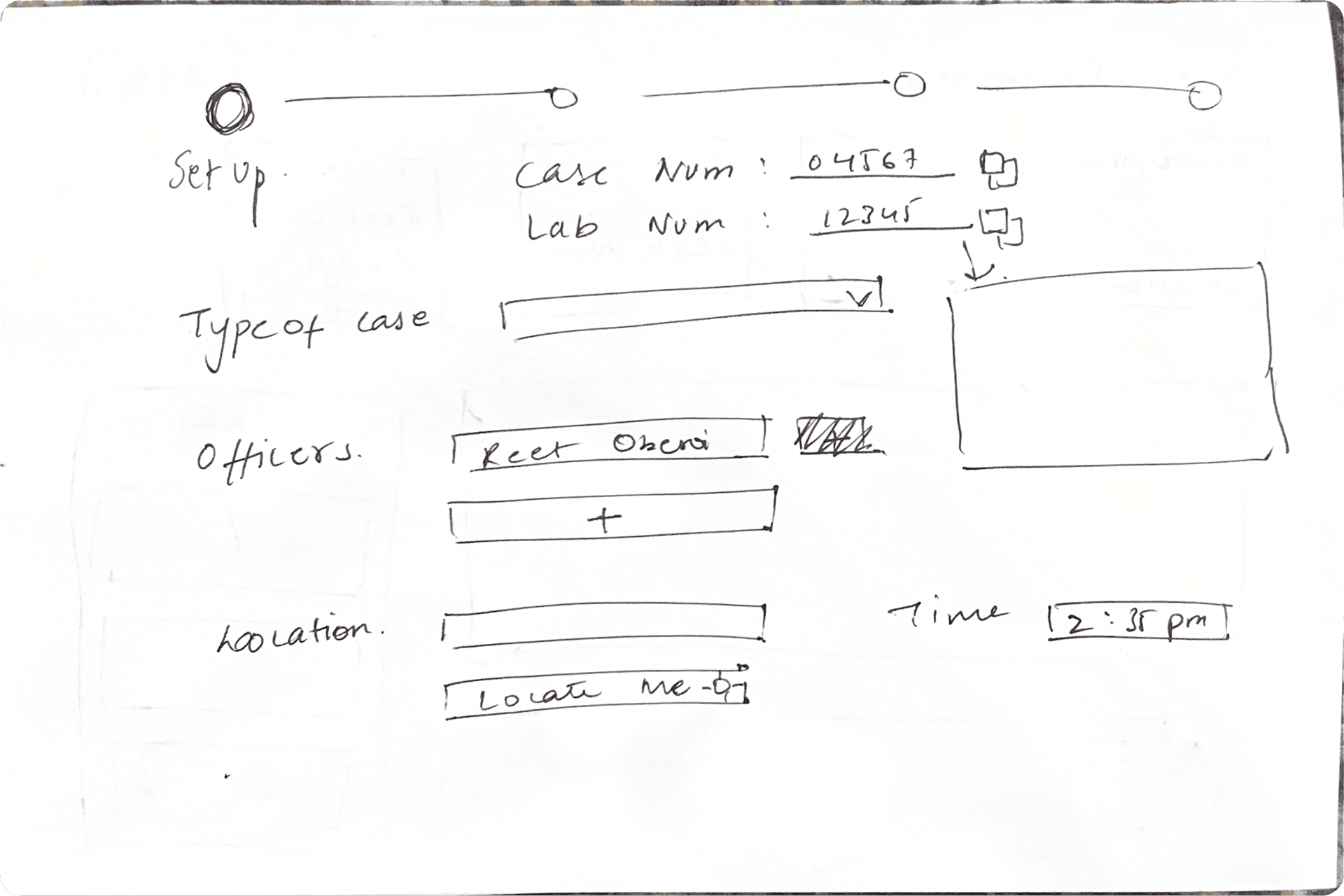
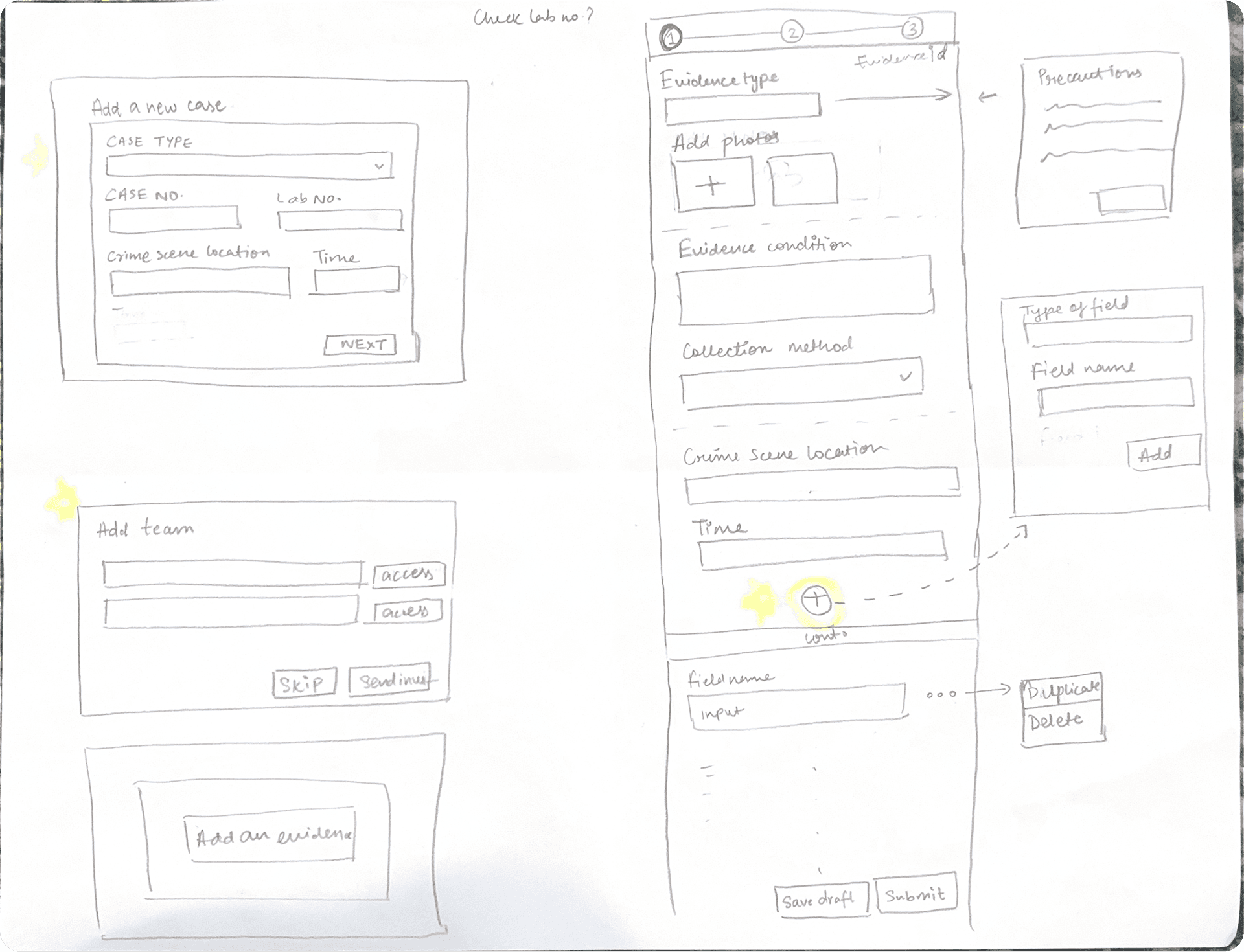
We landed on a tabbed layout over a single linear flow, since evidence work isn't linear and officers need to move between steps freely.
<!———
Testing
———>
Testing it with officers
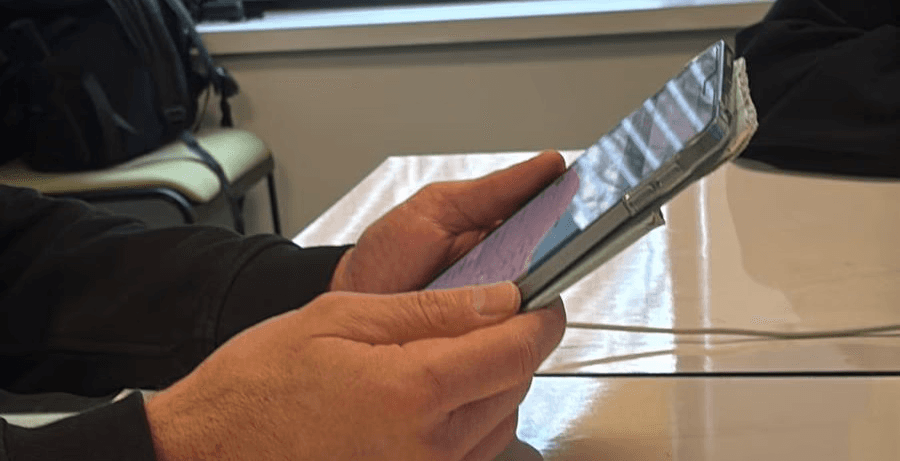
We built the designs into a working prototype and tested it with five law enforcement professionals, three remote on desktop and two in person on tablet.
The flow mostly held up. Two changes mattered most.
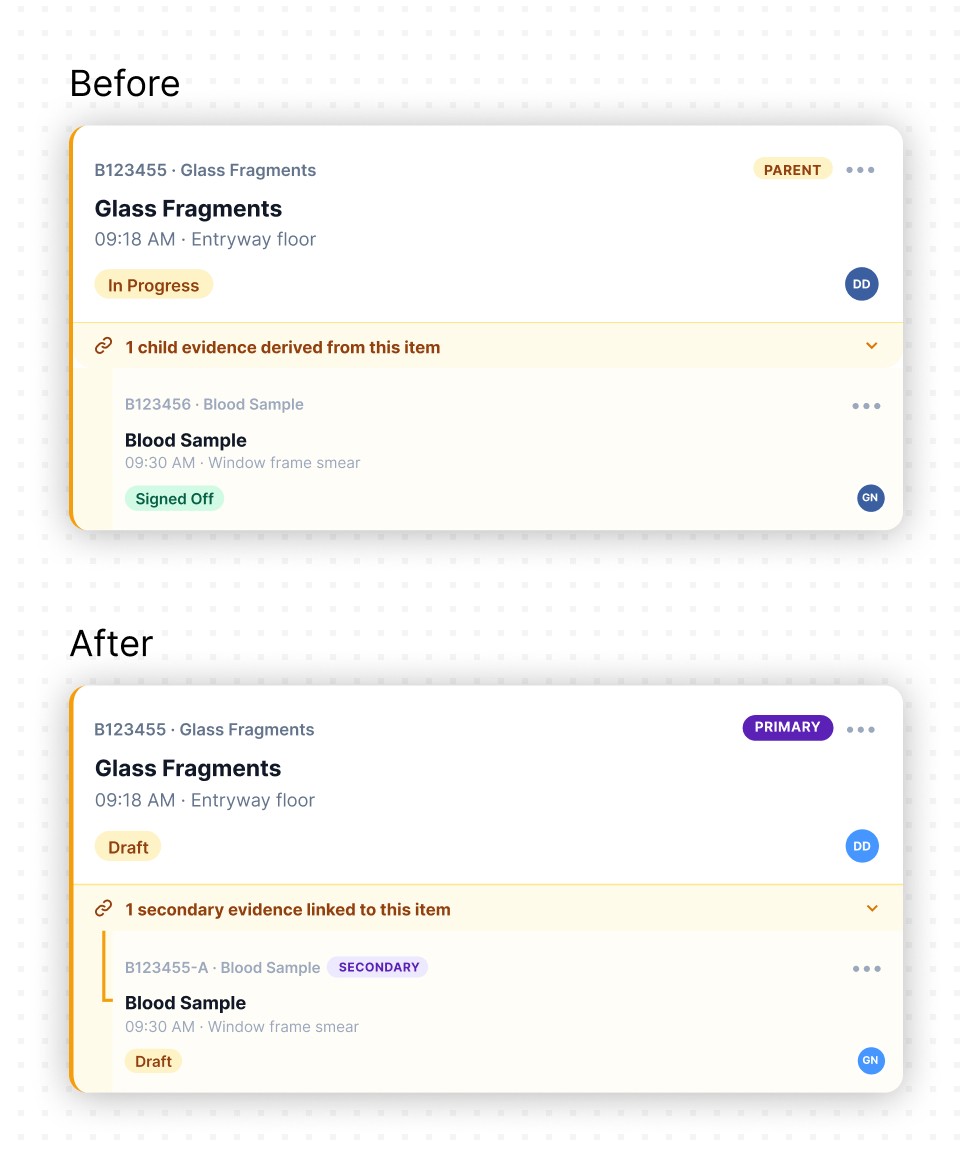
Our terminology didn't match how officers talk.
"Why am I linking it as a child? I'm not aware of that terminology." -P3
Officers didn't recognize the words we'd picked.
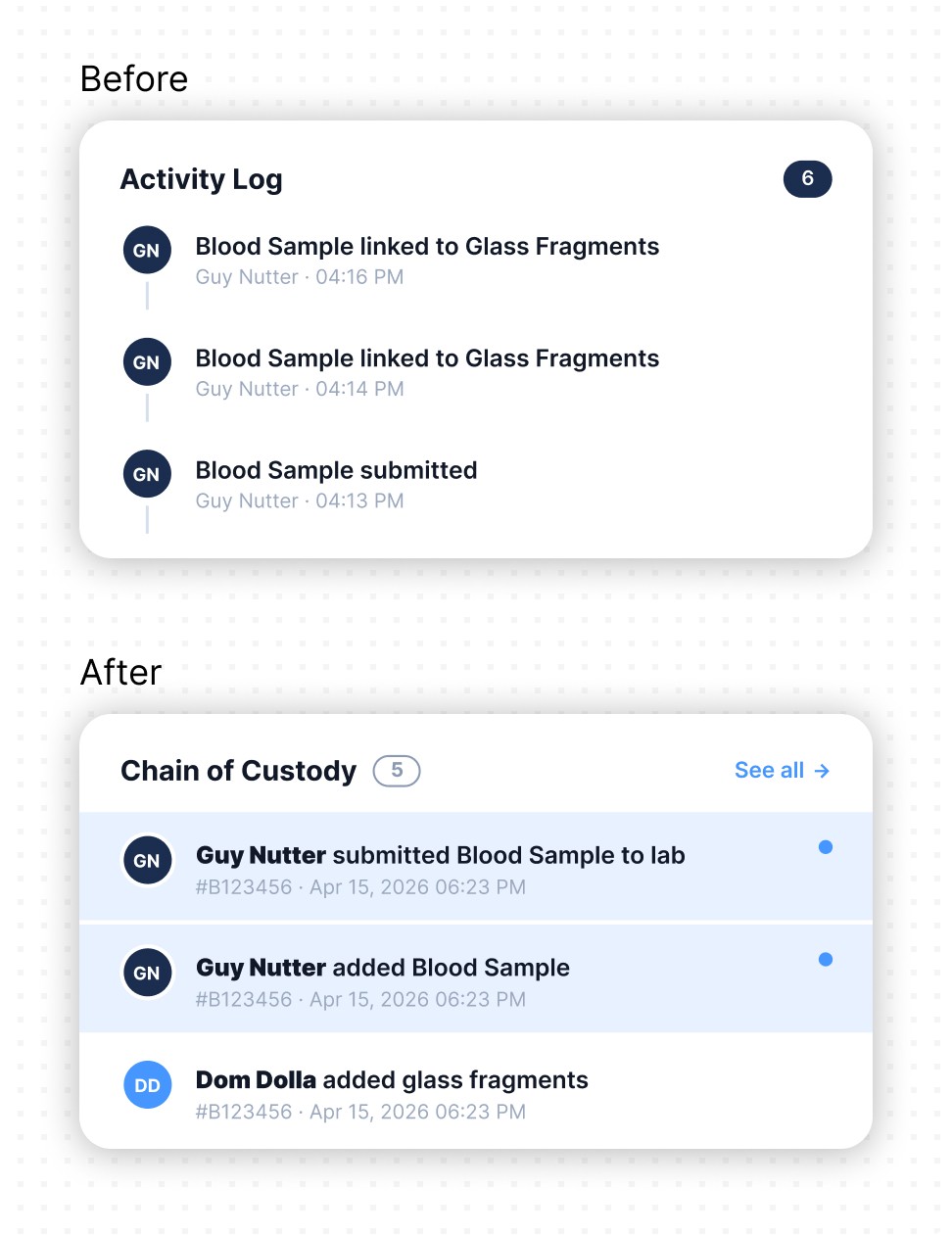
We renamed:
1. "Parent" & "Child" to "Primary" and "Secondary" 2. "Activity Log" to "Chain of Custody"
Both read clearly the moment we changed them.

Evidence collection is a two-person job.
"The note taker should be able to say the other person collected the evidence." -P3
The form assumed one person did everything. We added a "Found By" field, so the record shows who collected an item separately from who logged it.

<!———
Final Product
———>
What we built
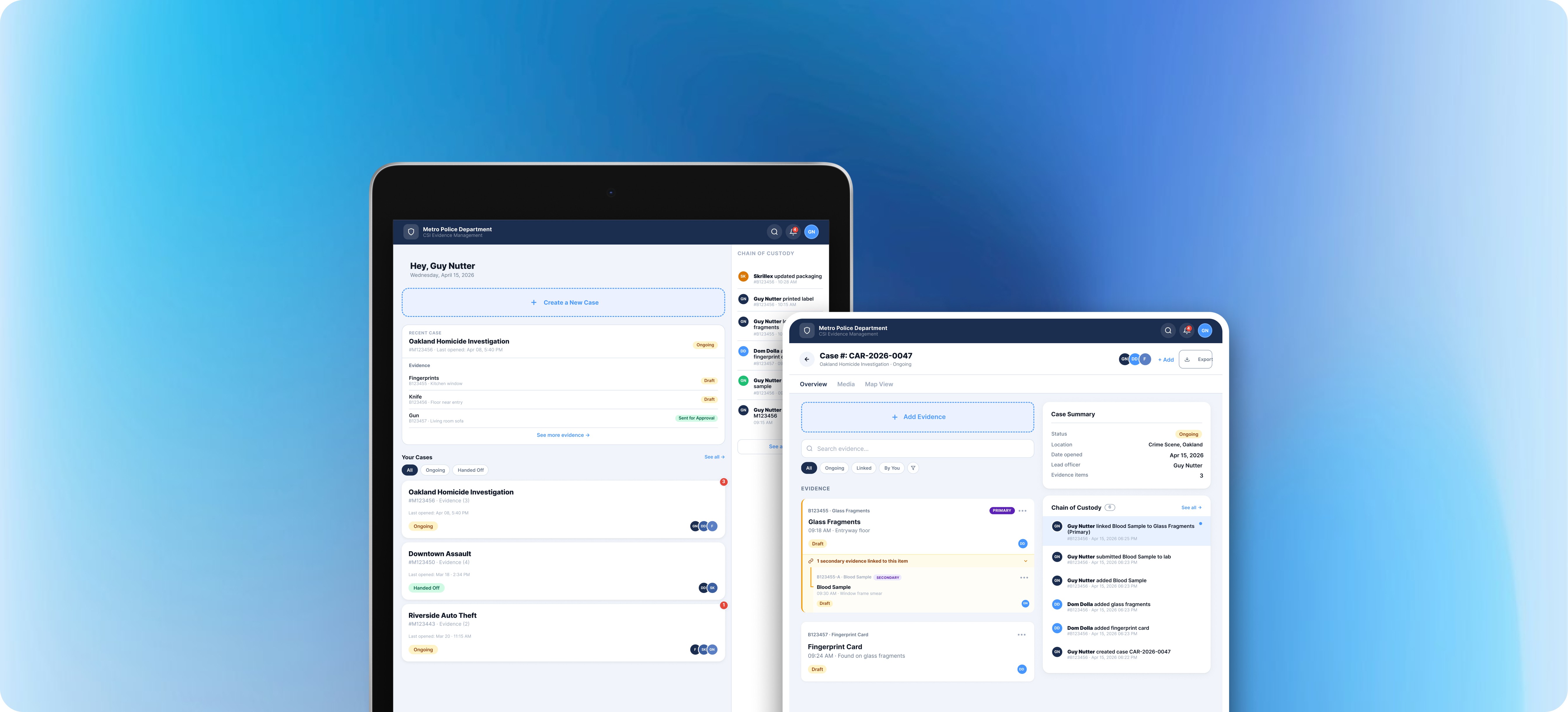
I pitched the team on building a coded prototype with Claude Code, and I led the build. Instead of clickable screens, we have a real, working product: the tabs hold their state, the form adapts to the evidence type, evidence links and unlinks, and Face ID gates submission until a record is complete.
That changed what testing could tell us. Officers used the actual product, so the friction they hit was real.
Here's how it works, from the scene to the evidence collection room.
Evidence capture
It starts when an officer creates a case, assigns the other officers, and fills in the details, then adds the first piece of evidence.
The form is dynamic and changes with the evidence type, so a blood sample and a fingerprint card never show the same fields.
Details like location and time fill in on their own, and the tabbed layout lets officers work in whatever order the scene calls for.
AI guidance
We built an AI guide to act as a safety net. It prompts the questions an officer might forget in the rush of a scene, and surfaces what could be missing as they write.
It only suggests. The officer decides what goes in the record.
A chain of custody in every action
Behind every action is the chain of custody. When an officer adds evidence, links items, submits a form, or even opens one someone else started, Face ID and a digital signature confirm it's them.
Each step is logged with a timestamp and identity, and the log updates live on the dashboard.
No one has to chase down a piece of paper to see which officer did what.
Link related evidence
Linking keeps track of which evidence belongs to which. Say an officer finds a blood sample on glass fragments: they can link glass fragments as the primary item and the blood sample as the secondary, with the IDs updated so the relationship is clear at a glance.
<!———
Learnings
———>
What I learned
The words matter as much as the design
We assumed the flow was the hard part and the labels were a detail. In testing, one unfamiliar word was enough to make officers distrust a feature, so we learned to use the language people already know instead of the terms that made sense to us.
Build the real thing when you can
I expected coding the prototype to be the easy part after the design. It taught me the most, because a working build breaks in ways a Figma file never will, and finding those breaks early during testing made the final design stronger.
Great teammates make it easier
They put in the work, kept us organized when the timeline got tight, and made a heavy project genuinely fun. That's rarer in a group project than it should be.